
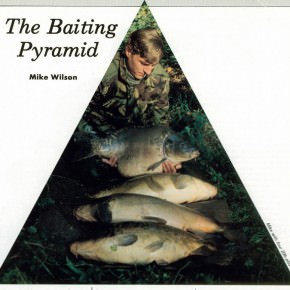
Unlike today, massive carp are regularly featured in many magazines. In the 1970s, it only took a 20lb fish to make angling headlines. The ‘modern era’ of hair rigs, bolt rigs and long range fishing was still someway off and the capture of any carp, let alone a big one, was considered an achievement. There was very little in the way of ‘off the shelf’ carp tackle or information so most anglers innovated and improvised their way forward creating new tackle and strategies to outwit their quarry.
One of those anglers was Mike Wilson. He pioneered a way to selectively catch bigger fish. The method still stands the test of time and should be in every angler’s armory.

A little known water…
Until 1980 Ruslip Angling Club held the exclusive fishing rights to a 68 acre gravel pit in the Colne Valley. Despite stocking in the late 1950s and 1960s, few members fished for carp in the early seventies. One of them was Mike Wilson. Mike joined in the late 1950s. He helped create Savay Lake as a renowned fishery, and later recognized its potential for big carp. His early attempts were frustrated by smaller carp and other species. This intrusion limited his ability to focus on the larger fish. He had seen those larger fish.
Before the Hair Rig
Particle fishing was very much in vogue with baited hooks. It used light tackle, 6-8lb line, and small 0.5–1 oz running leads for close-range margin fishing. Baits were typically side-hooked. The bait sat along the shank. This left the point exposed to improve the chance of a hook up. However, even the most confidently feeding carp could rapidly eject a baited hook. It required equally lightning-fast reactions from the angler. The ability to say alert and hit the slightest line movement was known as twitching. This term also describes how most anglers behaved after a long night spent staring at the rod tip.
Attention to detail
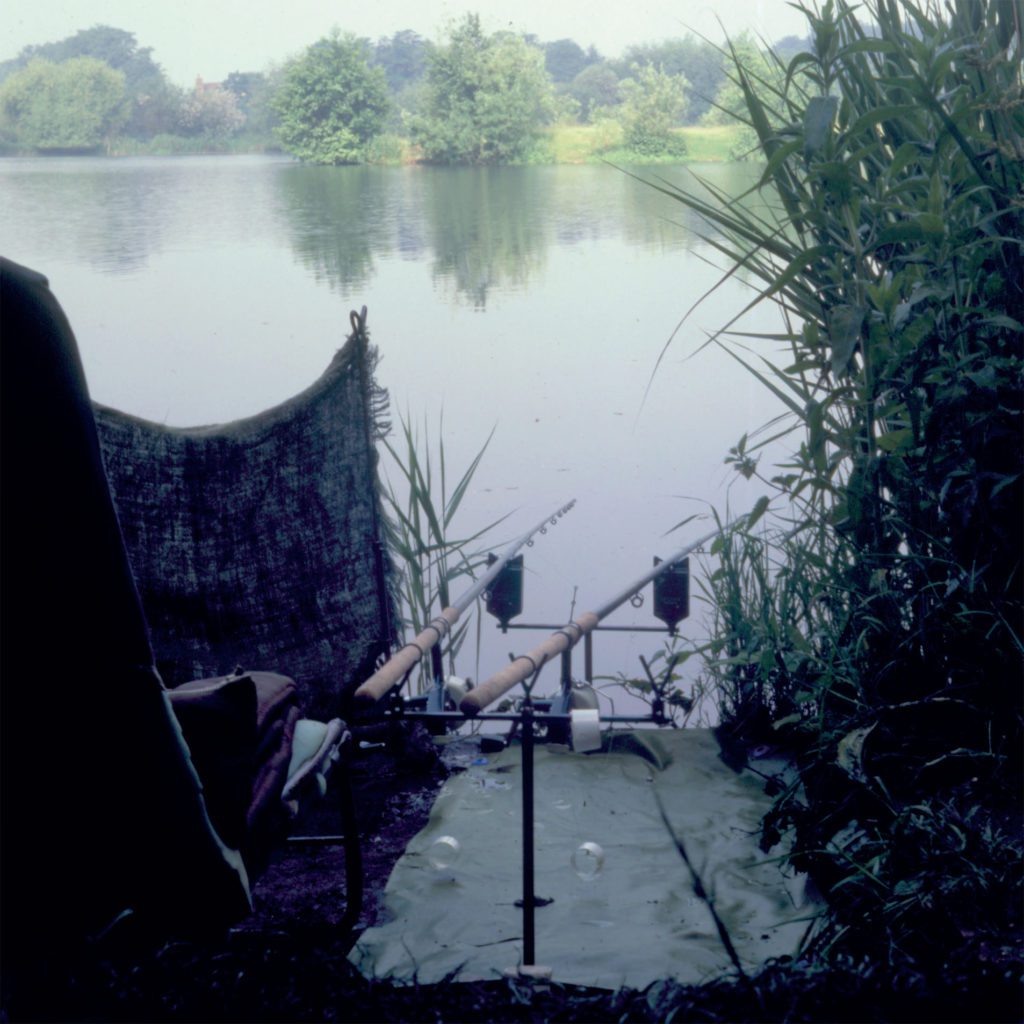
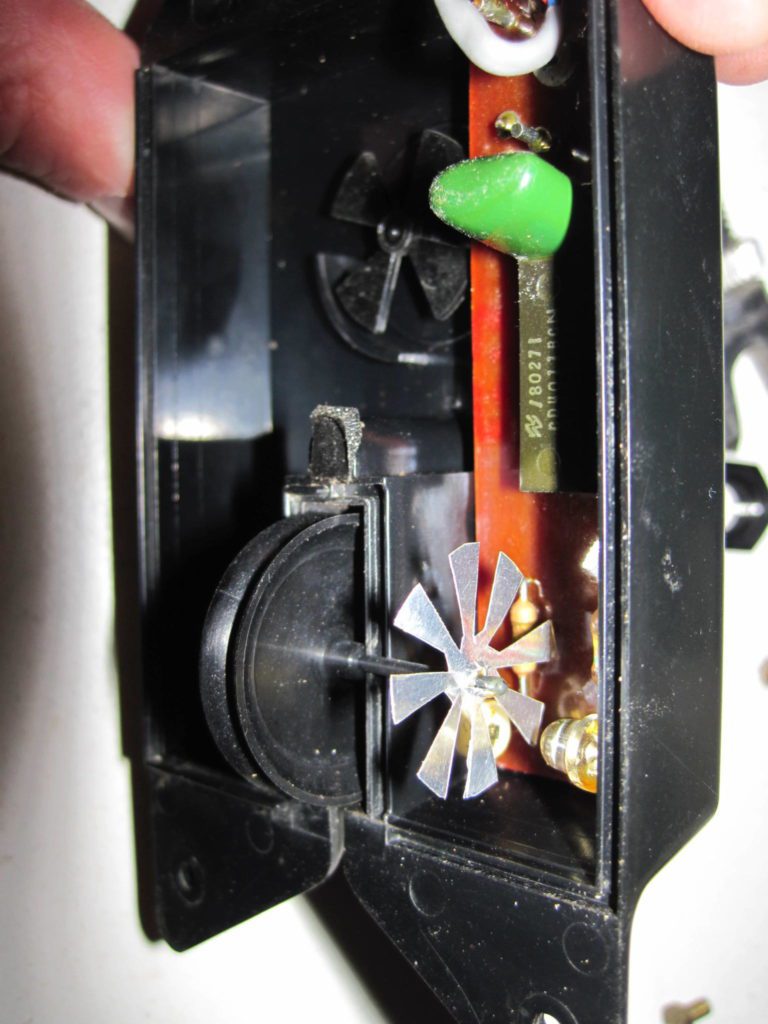
As a perfectionist, Mike always seeks to refine his tackle and techniques. He modified his alarms for incredible sensitivity. He carefully set up his rigs and minimized anything that might spook a wary carp. On the bank, Mike took every precaution to avoid disturbing the fish. When fishing the margins, he even erected a screen to prevent bankside movement from spooking them. His chair was positioned right next to the rods to detect even the smallest line movement. In the current bolt rig era, it is amazing how many bigger fish could be landed. This would occur if anglers learnt to strike with a 1-2 inch bobbin lift or drop. The ground sheet also allowed the underlying grass to look relatively untouched. This made a casual passerby unlikely to notice that someone had been fishing that spot.
Animal Behavior
A TV documentary on the hierarchical & competitive nature of animal behavior set him thinking. It described a pyramid of fewer, larger, and more dominant herd members. They push out their more numerous, smaller brethren at the watering hole or feeding area. So why not apply this assumption to carp? Mike devised a structured ‘Baiting Pyramid’ strategy that required several weeks of feeding the lake margins before fishing. If his ‘Baiting Pyramid’ theory proved correct, the larger carp would stake their claim. The smaller fish in the swim would be pushed out. The question was would it work in practice?
Mike needed large quantities of bait. He initially chose sweet corn because a friend worked in the frozen food industry. However when this source ran out he switched to maize (feed corn) as it was both inexpensive and plentiful. In early August Mike spent several weeks patiently ‘chumming’ the margins and a couple of swims. The key he felt was to resist temptation. He aimed to fish only after the larger carp had established their authority. As the weeks passed, the swims began showing signs of eagerly feeding carp. It took enormous reserves of willpower to resist the temptation of putting a line out. When the time finally arrived to start fishing Mike was not surprised to find that the takes were supremely confident. Remember this was the moment the bait sat on the hook. Before hairs and bolt rigs, a 1-2 inch lift needed to be hit before the hook was ejected.
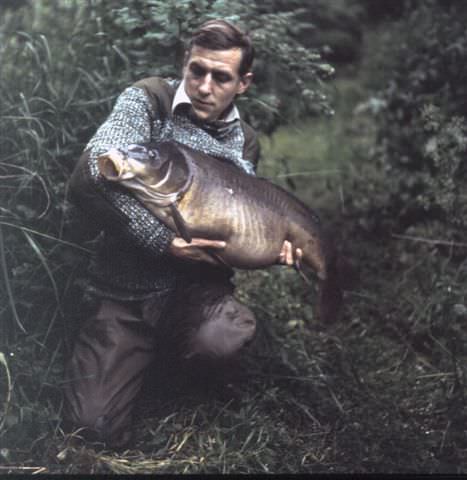
In an era when anglers were lucky to catch one or two doubles in a session, Mike’s results were spectacular. That fall he took twenty-three fish; ten doubles, seven low to mid twenties, six fish over twenty-nine pounds. The crowning end to his carp season – a low thirty. That fall he took twenty-three fish. Ten doubles, seven in the low to mid twenties, six over twenty-nine pounds. The crowning end to his carp season was a low thirty. At the time Mike avoided any publicity but his passion for large format photography dutifully recorded his outstanding success and what was a truly remarkable achievement rightly takes its place in carp angling history. Mike even applied to join the British Carp Study Group (BCSG) run by Peter Mohan. As was required he was duly interviewed but his application rejected as no one believed he could possibly have caught all the fish he claimed. If they had asked to see some evidence Mike might (despite the publicity ban on Savay) even have shown them some of the photos sitting in the trunk of his car… they’d have been blown away!
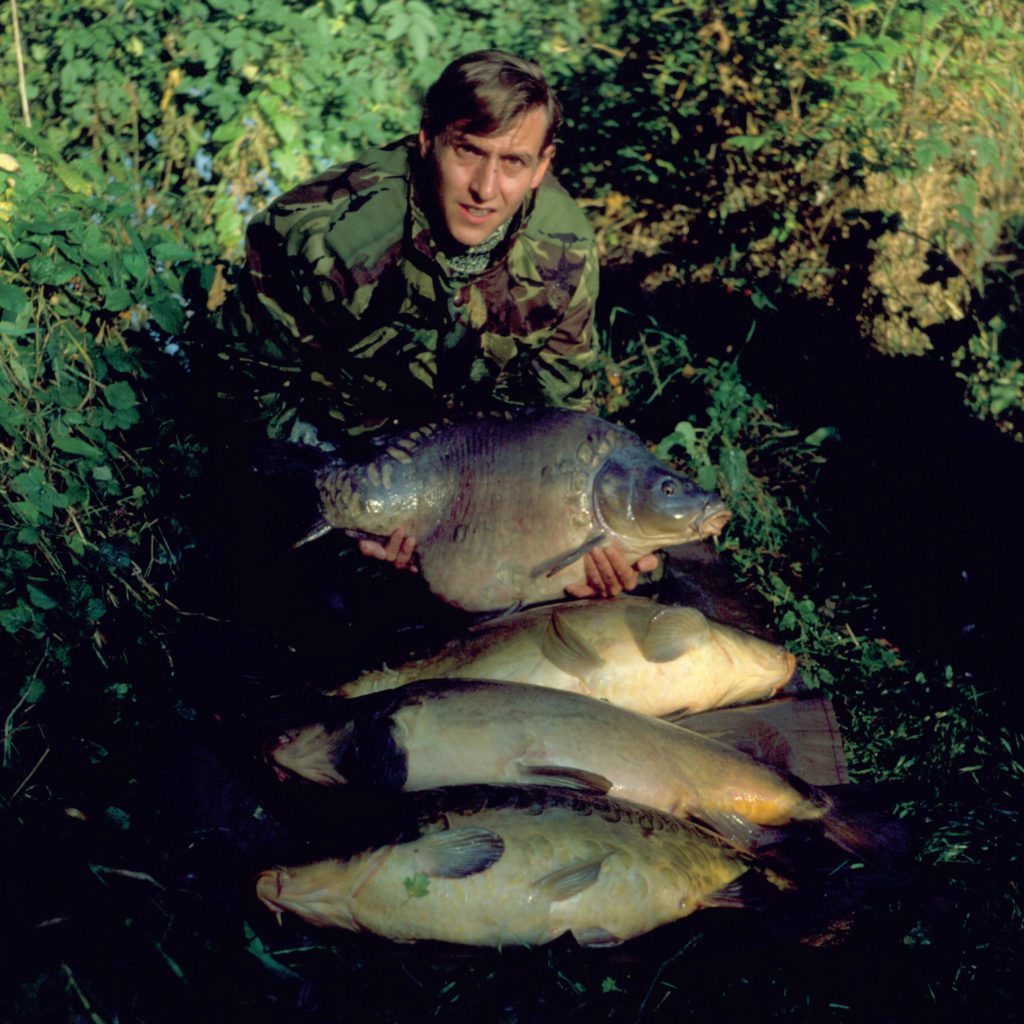
In 1979 Mike introduced me to Savay and a new level of carp fishing – an extraordinary apprenticeship. Sadly by the end of that season Savay’s cover had been ‘blown’ and its potential for big carp made it a focal point for every top carp angler in the UK. Walking along the bank at the start of the fishing season in June 1980 was an introduction to the Who’s Who of the carp world – Rod Hutchinson, Andy Little, Lenny Middleton and Kevin Maddocks to name but a few. That summer and fall the night air echoed to the repeated ‘thwack’ of high performance catapults firing boilies to distant swims while self hooking hair rigs took away the stress of hovering over rods waiting for the slightest ‘twitch’. The modern carp era had arrived and big fish photos began to adorn the magazines.
Does the “Baiting Pyramid’ still work today?
In reality it is possibly even more relevant here in the USA where many waters are yet to reveal their true potential. In addition to trying to single out the bigger fish a consistent baiting program is usually needed to simply divert the carp away from their regualr feeding routines and dependence on natural food.
In 1996 I discovered a large body of water that showed potential but offered limited access and little in the way of under water features that might be targeted as ‘feeding’ areas. I chose one of the few accessible swims and initially began baiting over a large area. The idea was to intercept carp as they patrolled the lake and hopefully ‘focus’ them over time by reducing the size of the baited area. Following Mike’s advice I restrained my eagerness to fish and continued baiting for almost 3 weeks. Then with a subtle twist to his theory, began reducing the quantity of bait a few days prior to fishing (mostly feed corn plus a sprinkle of boilies) in the hope that it would further increase the competition amongst the larger fish.
The initial results proved a little disappointing as I started with a couple of morning sessions and only ended up with only a couple of low doubles and a fish around 5lb. However on my first evening session it was all action and produced 3 high teens and 2 twenties, the biggest going 26lb. After thinking about it some more the ‘light’ eventually went on… So far I’d only baited in the evenings so naturally the bulk of the fish had been ‘conditioned’ to appear at that time for their daily feed.
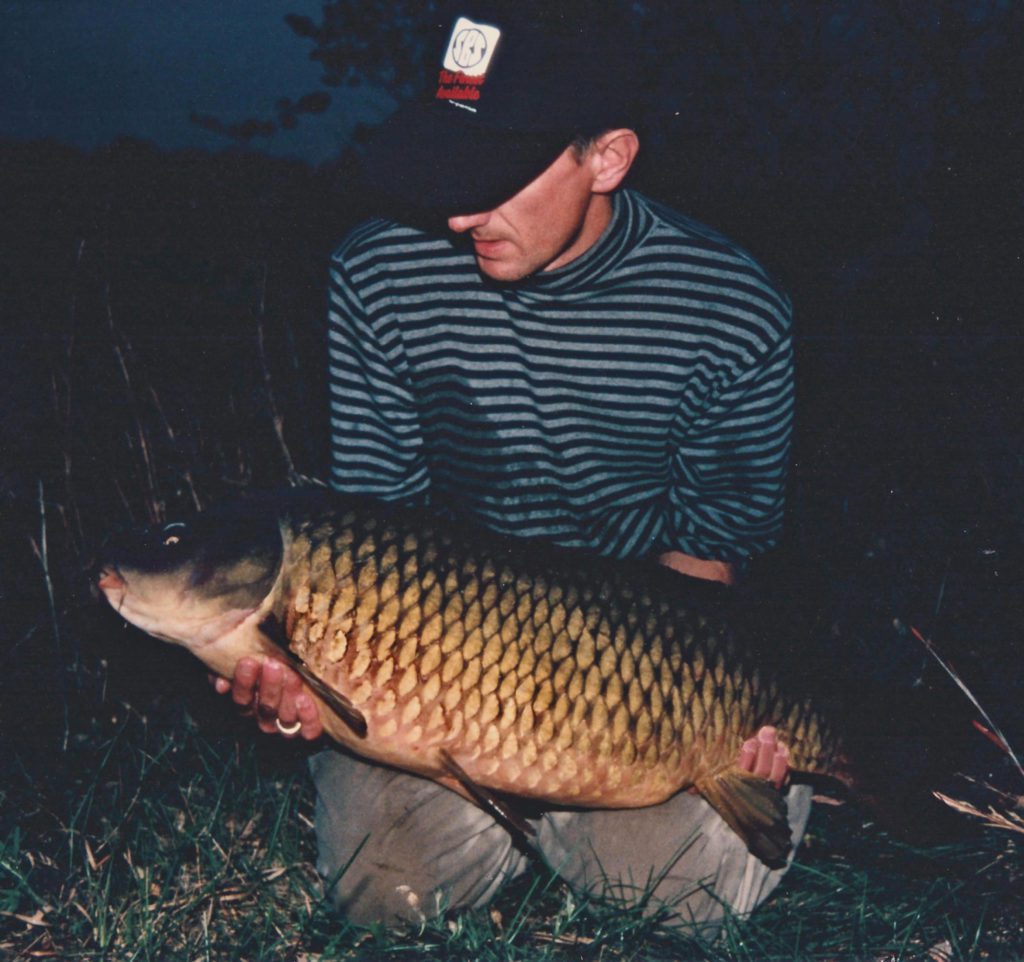
For several weeks almost every session produced a twenty and nothing under twelve pounds. So far fish to twenty-eight pounds had been taken but I was certain there was more to come… in early September two friends joined me for an evening session and as darkness approached one of my Delkim’s sounded and settled into a reassuring blur of sound as a fish peeled line off the bait runner. At first the fish kited wide to my left before I had any sense of the battle to come. This was clearly a very strong, solid fish that stubbornly refused to give up for what seemed like an eternity. As it finally rolled over and into the waiting net we all gasped – it looked huge. But just as we lifted my fish clear of the water another alarm sounded – this time Chris was in and while he played his fish yet another alarm went off and Steve was also hooked-up. In a little over 30 minutes we each landed a fish over thirty pounds – All fully scaled commons and weighing-in at an incredible thirty-one; thirty-four and thirty-six pounds, respectively. Once again the ‘baiting pyramid’ had worked its magic.
Since that early result I’ve continued to use the Baiting Pyramid successfully over the intervening years here in North America. In 1996 I used boilies fished over particles (mostly maize) but have now tended to fish either one or the other instead of together. I’m a big fan of particle baits in the summer but tend to focus on a boilie only strategy in the Spring and Fall it seems to sort out the bigger fish on a more consistent basis. However don’t take my word for it… give it a try for yourself and don’t be afraid to experiment or tailor it to your own waters.
Getting up to date…
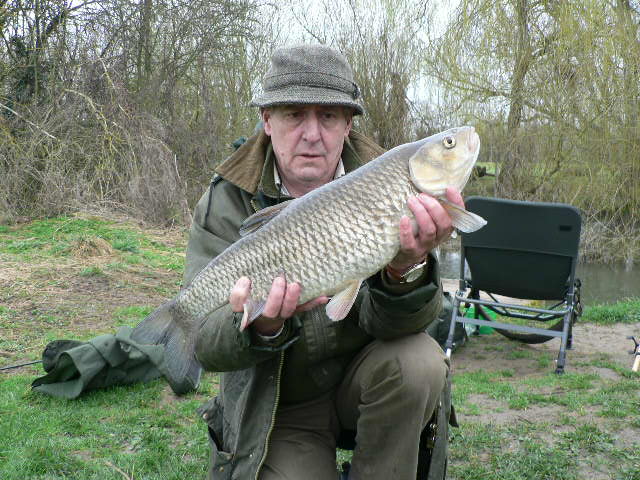
After having Savay almost to himself for 20 years Mike eventually moved on to focus on other species once the syndicates took over. In addition to his passion for researching angling history, collecting angling memorabilia and vintage tackle Mike still manages some time on the water to add to an already impressive list of specimen fish.
Mike was recognized for his contributions to carp fishing. His induction into the Carping Hall of Fame occurred at the 2013 Carpin’ On Show. Additionally, he created the Baiting Pyramid and developed coated leads and latching LEDs on alarms.
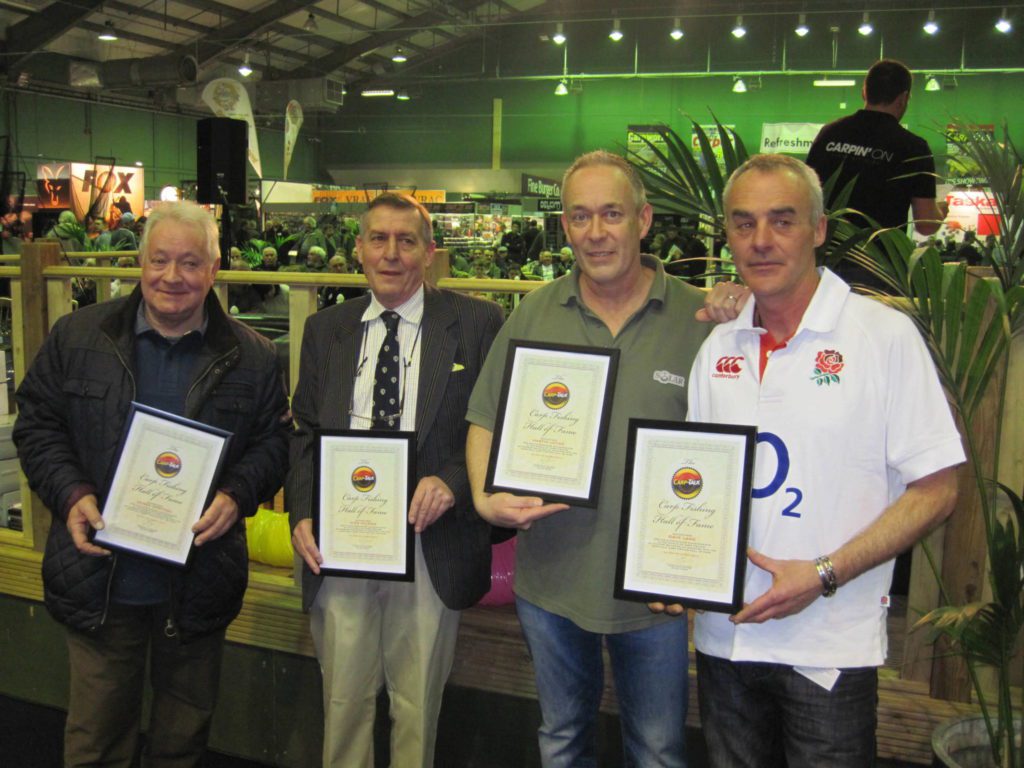
If you enjoy a good read, I recommend Rob Maylin’s recently published book. It covers Mike Wilson and is part of the Big Carp Legends series.
http://www.bigcarpmagazine.co.uk/buy-books.html