
The Fundamentals of Carp Fishing
New(ish) to carp angling? Blanking a lot, or all the time? Only catching fish under ten pounds and desperately wondering how you catch the fish you keep seeing on social media? I’ve been contemplating lately the absolute basics of carp angling that will land you those fish–or something at least close.
This article is for those who are new to carp fishing or those who have been fishing for some time but have hit a dry spell and are looking for a way to break the blank.
The fundamentals: #1. LOCATION
It’s happened to all of us–that seeming inability to catch a carp. Sometimes it happens at the start of the pursuit of carp; other times (and I include myself in this category) it happens after you have been carp fishing for some time or maybe at intervals over the course of many years. When this has happened to me I have generally found myself going back to basics. To be fair, this can help, but I feel I have now found a better way that is quicker to get back on (or start off on) the right track. It’s a bold claim, but I’m feeling bold right now.
Location. It can’t be overstated enough that the simple fact is you can’t catch fish that aren’t there. This is obvious to every angler (or even non angler) but it is overlooked with shocking frequency. The biggest reason that this happens seems to be not knowing how to find a swim that has fish to catch. So let’s take a look at some ways to find places to fish.
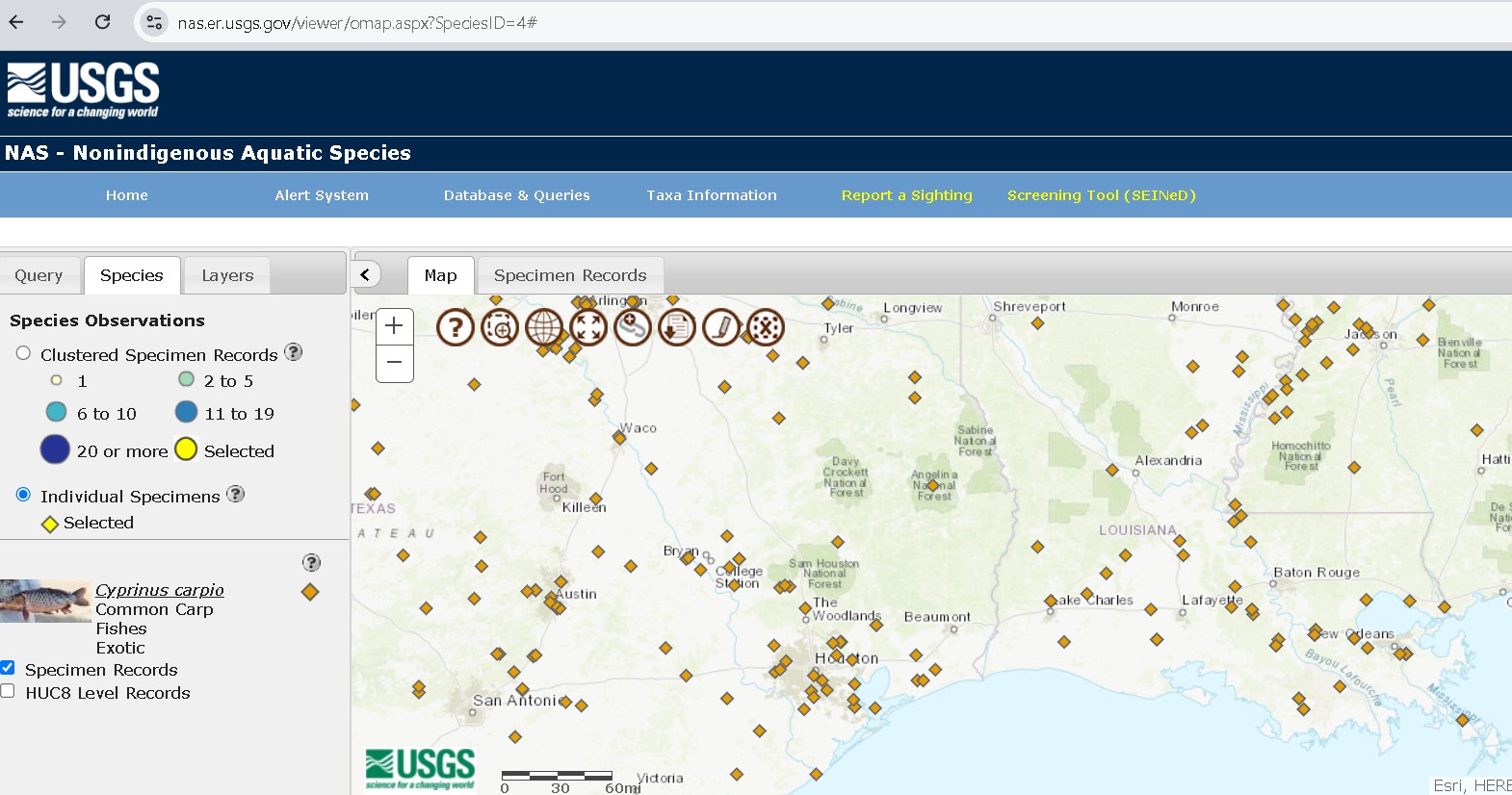
Online maps. Yes, there is a map that shows where carp have been found. It doesn’t have all the places that have carp, but it’s a start. The USGS maintains a web page that has records of where you might be able to find a carp. It takes some getting used to but allows an overview to start your search: https://nas.er.usgs.gov/viewer/omap.aspx?SpeciesID=4.
Depending on which state you live in there may be other resources that will allow you to narrow down your search. Often state natural resource agencies will have their own fish or fishing related mapper that can focus your search even more. For example here (https://tpwd.texas.gov/publications/pwdpubs/media/pwd_br_k0700_1218.pdf) is a list of waters in the Dallas/Fort Worth Area that have easy access and lists if they contain Common Carp.
Of course you can also find information on the Carp Anglers Group pages and social media, but looking for maps like these can often be a good way to find locations that aren’t as popular, and less fishing pressure can mean easier fishing. Once you have found a water that is thought to contain carp and close enough you can fish it, it’s on to the next step.
The next step after finding a water that holds carp is to find where on that water you might have the best results. This is a moving target as the best spots often change with the time of year that you will be fishing and with other factors such as weather and fishing pressure. One factor that doesn’t change, however, is how you will be able to fish for them. If you are limited by the tackle you have, then this must be taken into account when selecting a swim. If the fish tend to be 80 yds out at a spot, and you can only cast 50 yards, then obviously you will have to move to another swim.
The trick is to find areas that are open to the public. Again, most states have some sort of mapper that will show you where you can fish on a given water. For example North Carolina has such a map at https://ncpaws.org/ncwrcmaps/FishingAreas. Sometimes you will also be able to get a good depth map of the lake. If you can, look for areas that will allow you to fish in depth that can hold fish at a range you can fish at (more on that in the next section).
Google Earth is a great way to measure and map locations. The map below is a map that the Texas Parks and Wildlife Department made of Quitman Lake (yes, it has plenty of carp) that you can download and view in Google Earth. There are other map options as well and a search for the name of the lake and “map” will often turn up something that can be a good starting point. A word of caution however – these maps may not be very accurate and your own on-the-ground investigation will often be required to narrow down the areas that are actually best. 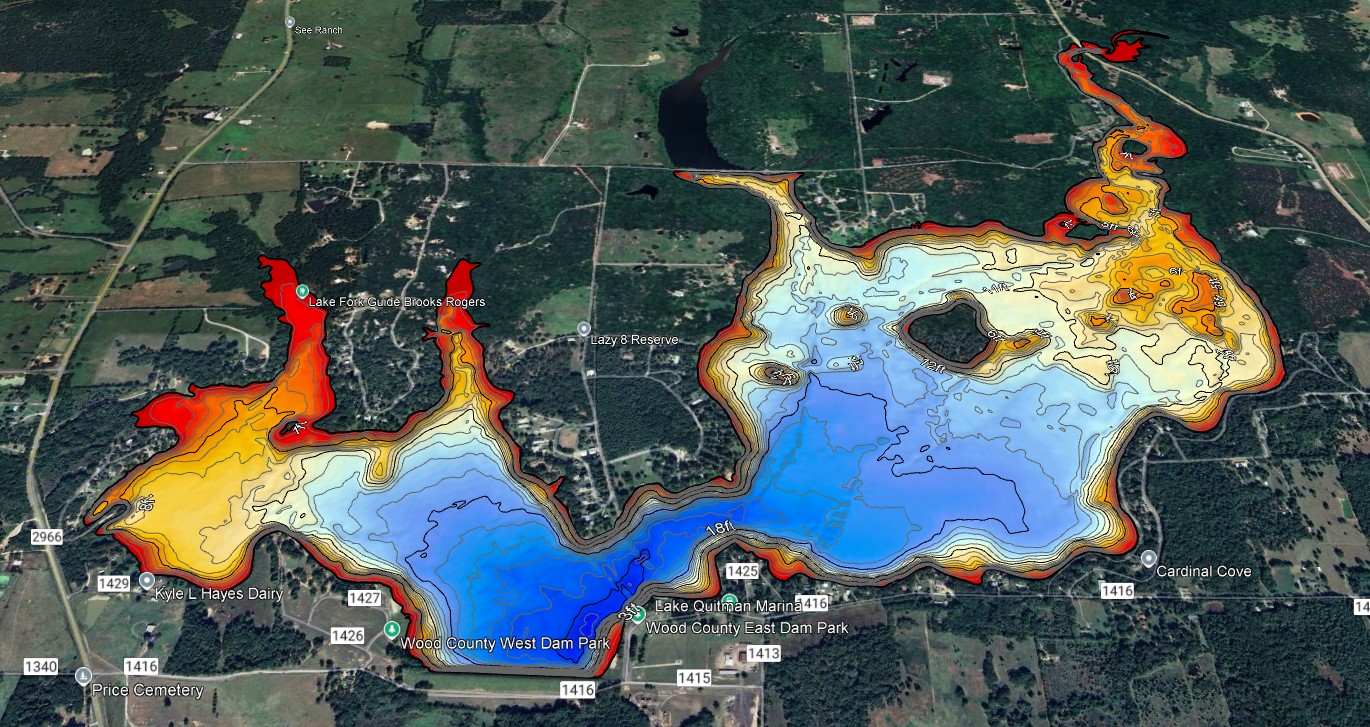
Bathymetric maps are a great way to narrow down potential areas.
So what depths should you be looking for? There is not one simple answer to this as there is considerable variability between waters and environmental conditions. Here are a few things to keep in mind when looking at a new water:
Get there early or late to look for fish showing. Carp jump. Why is still up for some debate but in many waters they will jump. Normally this is most obvious early in the morning or late in the day but can happen at any time. If you see carp showing in a given area that is about as good an indication as you can get that that is a good place to start fishing. The fish may move around but
Finding Fish
Finding fish is easy if they are showing. Even after they stop showing the same area can still be good.
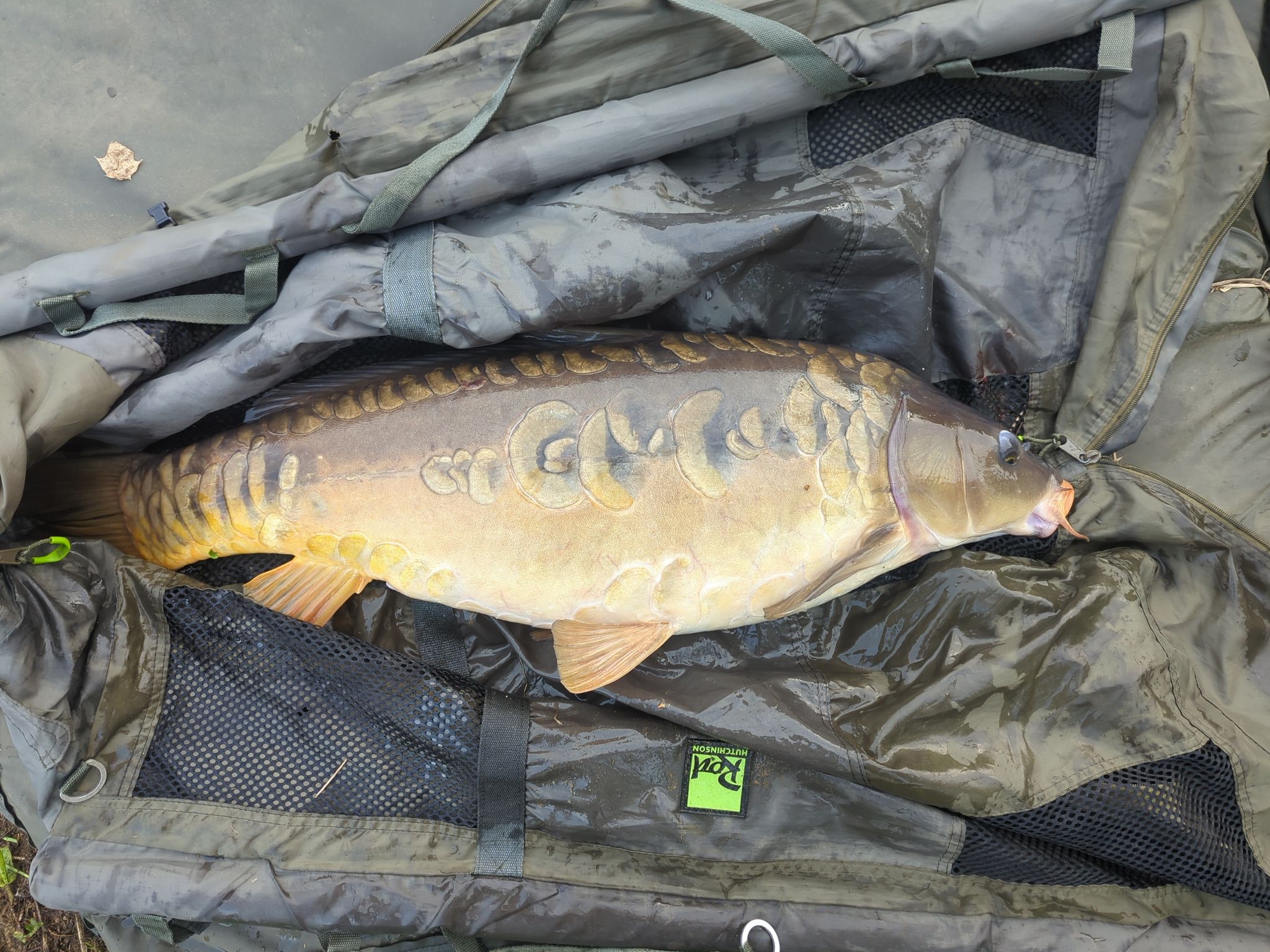
A nice mirror caught from a productive spot a year later.
You won’t always see carp jumping, but there might be other signs. If the water is clear you might be able to see them swimming (polarized glasses help) or see bubbles showing up on the surface as they feed. Are there a lot of lily pads of other vegetation that stick out of the water? You can sometimes see it moving as carp swim through it.
If no signs are evident, then structures such as brush piles or other snags can be a good place to look, but keep in mind the fish might be hard to keep out of them when hooked. So don’t fish so close you can’t stop them before they get there. Casting a bare lead out and dragging it back to check for snags will make sure you are in a spot that is actually fishable. You will also be able to feel how hard the bottom is to get some idea what it’s made of with some practice.
Obvious places to fish can be lacking, but if you find the best spot you have available you still might be able to make something happen.
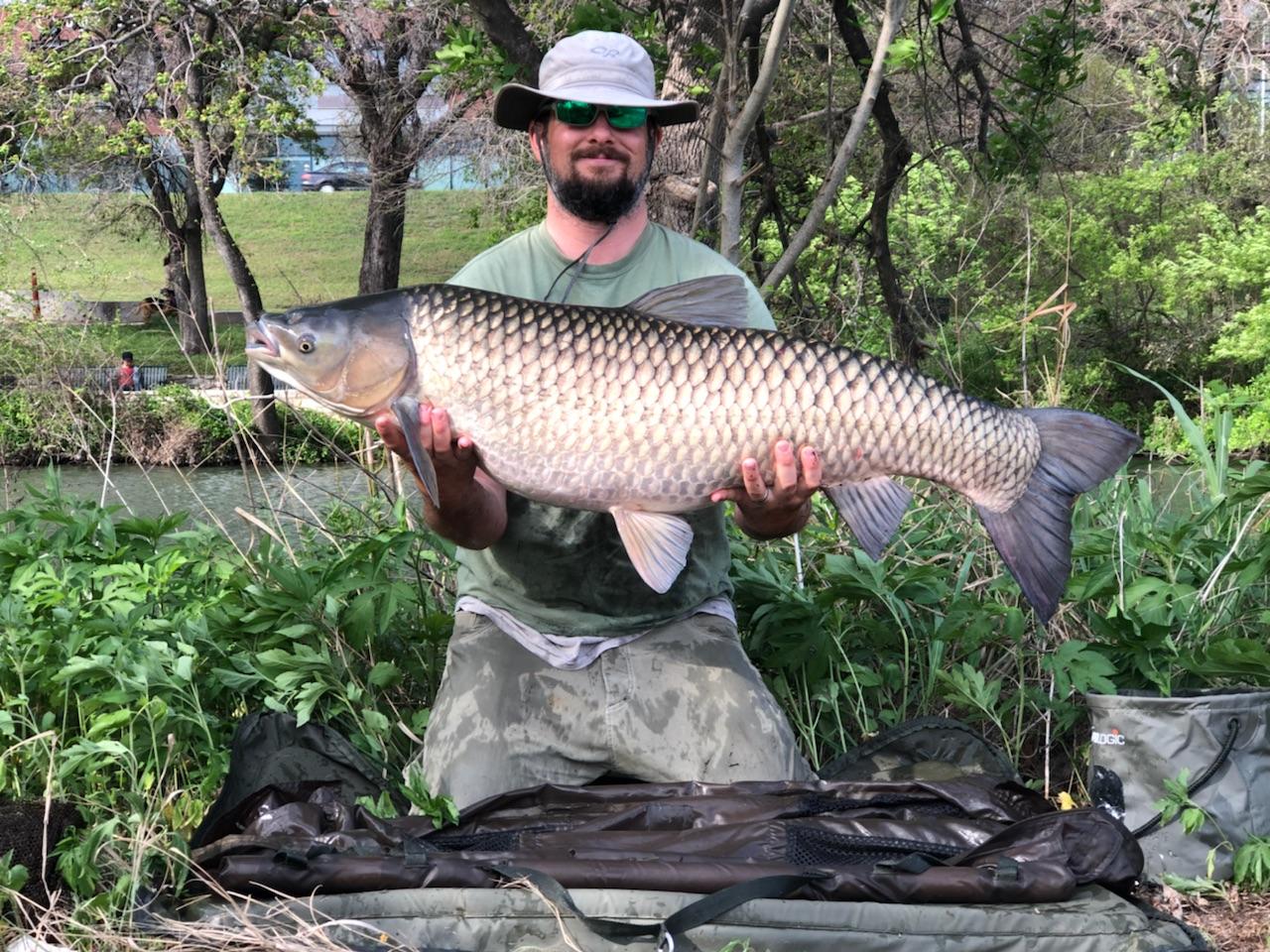
A 52lb Grass Carp – making the best of a spot during the ATC.
Sometimes there are simply no signs or obvious starting points so you just have to pick a spot and try it. You can find carp at most depths, but more often than not they are in shallower rather than deeper water. In general, water between 6-12’ is worth a shot at least until you find out some more information. I had a stunning 32lb common that was caught the first time I fished it a new water and from only about 30’ off the shore. In this case the bank was quite steep and I was fishing in 10’ of water at this range.
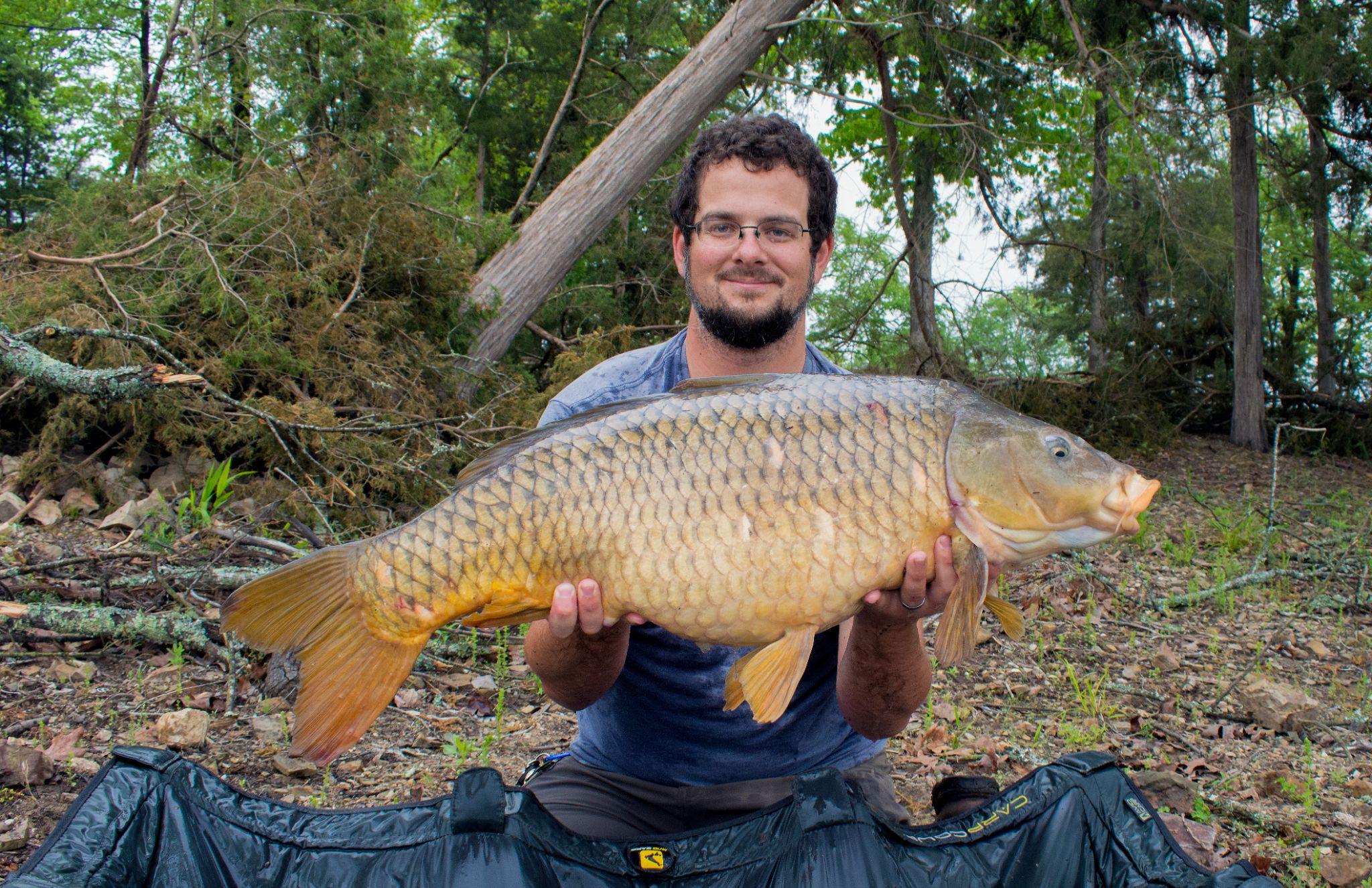
A 32lb common from close in on a new water.
Baiting (The Fundamentals)
Pre baiting is a great way to get fish to stop in the area you are fishing and makes them a lot more catchable. There are many ways to get your free offerings into position, but the key thing to remember is to make sure it’s not too spread out and in a spot you can put a hook bait in. It’s no good putting bait all over an area so the fish never find the hook and it’s no good putting out bait where you can’t cast a hook.
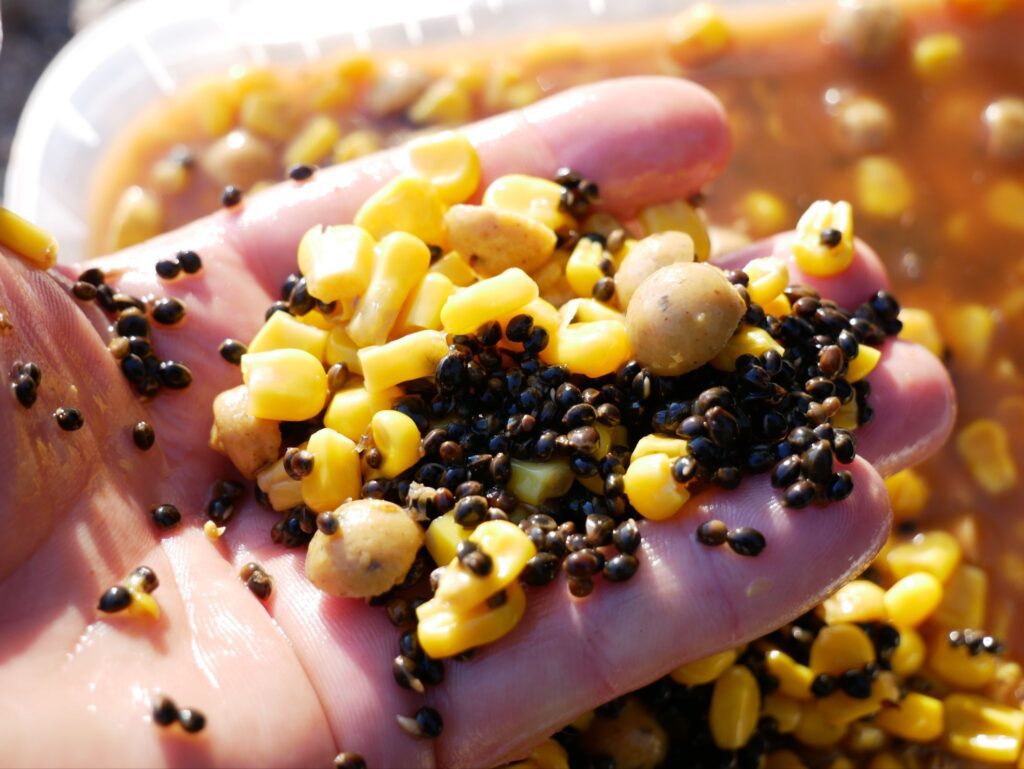
If you can bait the day before you fish so much the better, and depending on the water it might not need very much to get the fish interested. If you can bait for several days it’s even better, but again in some places you can put out too much bait so don’t go crazy with 100lbs of bait unless you know there are enough fish to eat it. In many cases a can or two of sweetcorn is enough if you put it in a fairly small area. Sweetcorn, hemp and a few chopped up boilies will work on most waters around the world. You can also swap out boilies for tiger nuts or chick (garbanzo) peas.
If you don’t currently “clip up” when using a spod start doing so now – baiting accurately to the same spot is vital.
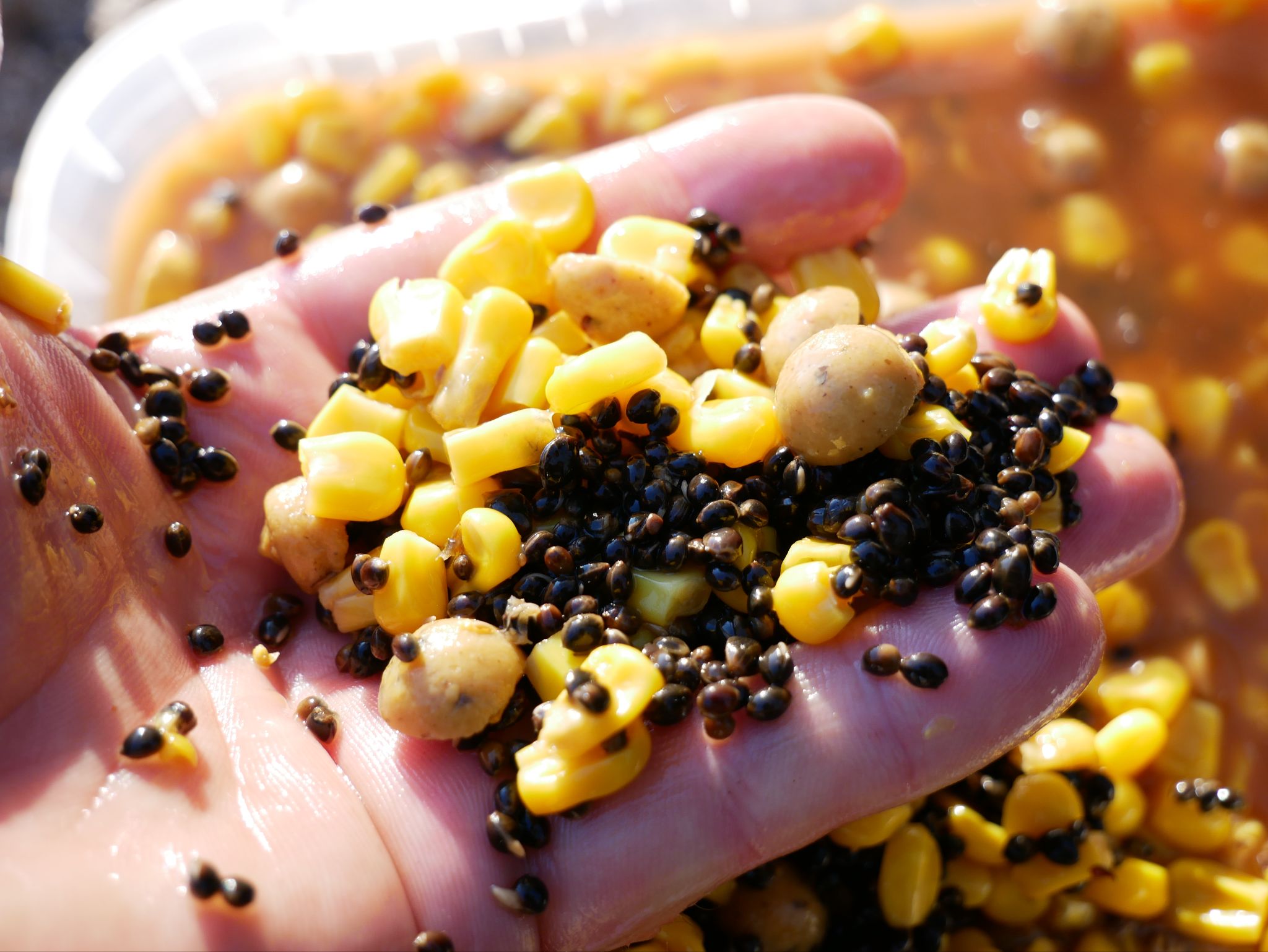
Sweetcorn, hemp and a few chopped up boilies will work on most waters around the world.
Summing up, there is no point worrying about tackle or other fun things if you haven’t got the location figured out. In the next installment I will go over rigs and bait. Until then consider the locations you have available to you and work on where you will fish them.
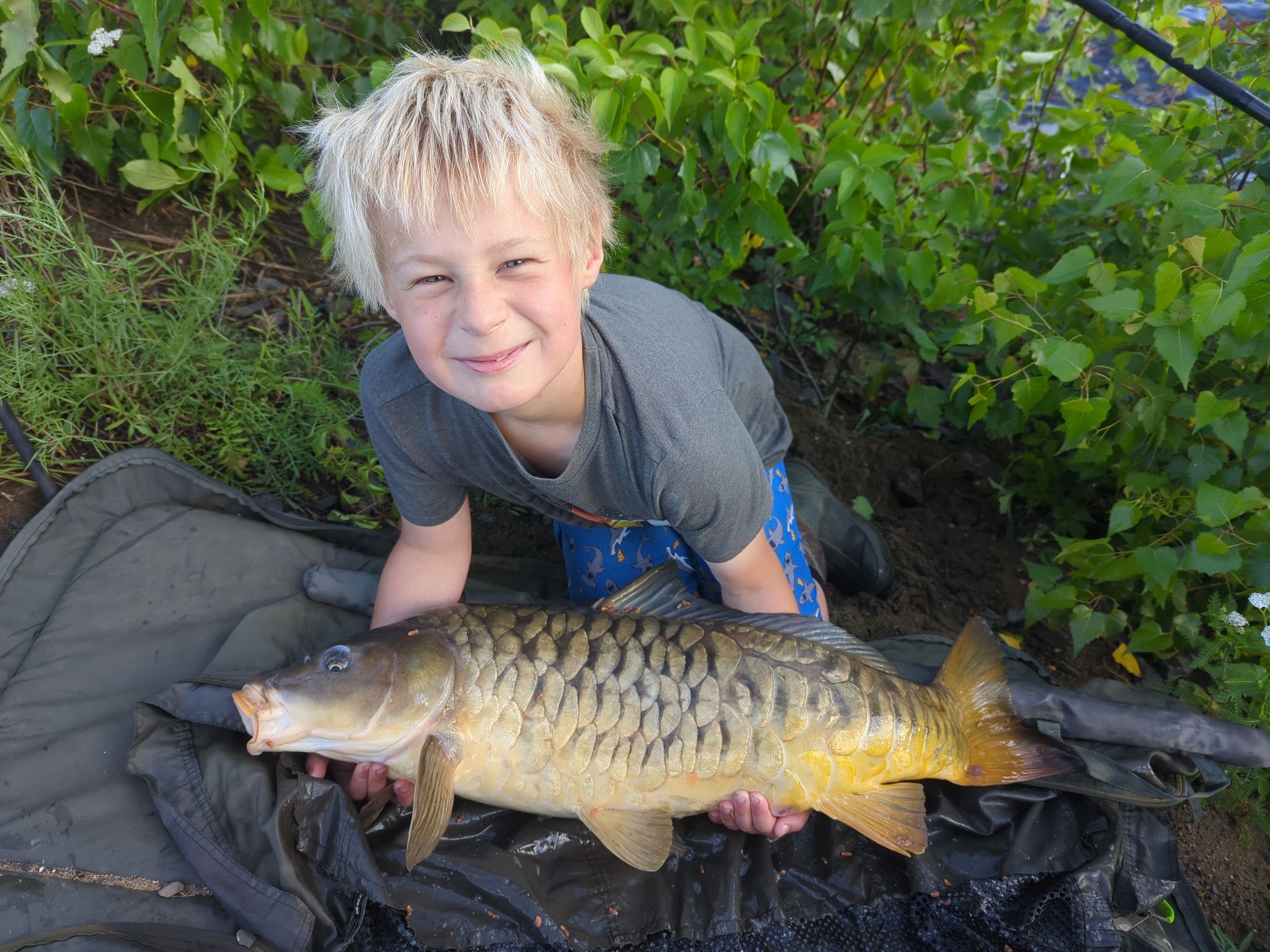
Location really is key for anglers of any age or experience!