
Rigs and bait
Finding the fish is certainly the biggest component of the catching equation–however, it is not all of it: Rigs and bait. Once you have located the fish, in a fish-able spot, its on to the next step: getting a bite. There is a lot written about this topic and just as much video, so where to start?
The aim of this article is to cut away unnecessary details and focus on what I have found to work. This advice should work in most waters that hold Common Carp in the world.
Bait
If you happen to head over to Big Carp Tackle’s website you will see, around 731 listings under bait. All of these baits will catch or attract carp in some or many conditions. Speaking from personal experience, it is good fun to buy and sniff test them, but this is not necessary. These baits I would take anywhere.
Sweetcorn (NOT Field corn/Maize) is probably the single most useful bait in carp fishing. It is fairly cheap, easy to get, and in most situations carp cannot resist it. Its bright color combined with its sweetness makes it an eat-on-sight/smell bait on most waters. It works well both as a feed and on the hook or hair. It tends to not fill up the fish very quickly so they will keep eating it for some time.
The downside is that many other species like sweet corn too. A lot. This can make using it as a hook bait difficult as catfish, turtles, etc. will frequently eat your bait. There are ways to deal with this, even if there are a lot of nuisance species active. Plastic sweetcorn is a good way to get a tougher bait.

Sweet corn is cheap and catches carp in just about every water.
Tip: Even if there are nuisance species, sweetcorn can create a “feeding frenzy” which will attract all species, including the carp.
Tiger Nuts are probably the most popular hook bait in the USA overall. They can be used as feed but fill the fish up much quicker than sweetcorn. You can make your own by soaking and boiling them or you can buy them ready-made. They are very tough and it takes a very determined turtle or catfish to get one off a hair. They are often fished with a piece of plastic corn. For baiting up, tiger nuts are best crushed up (or bought that way) so there are lots of little pieces to keep the fish busy and not overfeed them.

Boilies are the quintessential carp bait and in the right conditions are the one you want to be using. However, for the purposes of this article we are only going to consider them as hook baits, and even then, since we are keeping this as simple as possible, we will just be talking about wafters.
A wafter is a bait that has some flotation but not enough to lift the hook off the bottom. For whatever reason they don’t seem to be as popular as popups or bottom baits in the USA, but in my opinion, they are one of the most successful hook baits out there. There are a ton of flavors and colors, but stick with ones that are sweet, fruity and/or nutty as these are the ones that will catch fish on most waters.
Ground/pack/method bait can be used in a variety of ways. A good mix is a simple oats mix that will work well and can be flavored in many ways. However, flavor isn’t really needed as the oats and corn are often more than enough to attract and get the fish feeding.
Oats Pack Bait
Basic Oats Pack Bait Recipe
- One container of Old Fashioned Oats (42 oz)
- One can of cream style corn; add more as needed to pack
- One capful of flavor (Rod Hutchinson Legend Flavors are good; I like Mullberry Florentine)
- Two tablespoons of additive such as Munch Baits Bloodworm Complex Liquid Food
These baits are the ones that I find to be the most useful, and will catch you carp just about anywhere you go.
Now let’s look at the rig to use them with. I must admit I love rigs, both tying and designing them, but when it comes down to it you really only need one set up for most fishing situations. We’ll cover two different setups because I can’t help myself and they will each work better at different times.
Rigs:
The lead clip set up is extremely easy to use and is very versatile as you can change the hook link and weight quickly. I feel it does a good job of presenting the bait over many bottom types and the lead will fall off easily if it becomes snagged. When using a lead clip I fish with a blowback rig with coated braid stripped back a short distance.
A method feeder is a set up I would recommend having with you. This allows you to add a nice little pile of ground/pack bait right around the hook and can be devastating on many waters. I have found that it catches a lot of fish, but they may not be the biggest fish around. I use a soft braided hooklink and the same hook arrangement as with the lead clip.
Hook size is simple: size 6 for smaller baits, size 4 for everything else. As far as hook pattern, most will work, but I have very few hook pulls (zero on my “home” water) with a Gardner Tackle Mugga hook.
Baiting up:
For baiting up you will need a spod or spomb and a rod that can cast it. If you don’t have a spod rod, a surf rod will get the job done just fine. Little and often with baiting will also boost your catch rate if you get it right. Watching feeder match fishing videos is a good way to see how it’s done.
Instead of dumping in most of your bait bucket, put out 5-10 spods of bait and then fish over that. If you catch a fish, put in 2-4 more spods. If you go more than an hour or so with no activity, put out 1-2 more spods of bait. Use finer baits for this, like sweet corn, finely chopped tiger nuts or some of the ground bait with some sweetcorn in it.
IMPORTANT POINT: If you only get one thing from reading this, this is it: make sure you fish and bait accurately! If your hook is in the same exact (not 20’ away) area as the bait you are putting in you will catch more fish. If you can bait ahead of time, do so. There has been at least one study (that I remember) showing that more carp will show up the longer you bait and this is borne out by my own experience. Even just baiting the day ahead of time will help. Again, make sure that when you go to fish you can fish in exactly the same spot as you were baiting.
Example session:
Let’s look at an example water, Mill Creek in Canton, TX. This 237 acre lake has a good stock of carp up to 40lbs. The average size is around 17-18lbs. With the information I provided in the first part of the series you can find out the rest of the info you might need.
Now let’s look at how to fish it, and of course there is not one “right” way, but I have done well with the same tactics that work in most other places.
Step 1: Select where to fish, both swim and depth/range (as covered in part 1). On this lake there are a number of options, but don’t go much over 10’ deep most of the time as there is limited oxygen for the fish beyond that depth.
Step 2: Get the rods clipped up to the distance you want to fish at so you can be sure to hit the same spot every cast.
Step 3: Put out a few spods of bait – normally I start with 5 if I’m fishing a shorter day session, closer to 10 if I’ll be fishing for longer such as overnight.
Step 4: Get the hook baits out. I normally fish a few different baits.You have to have confidence with your set up, and both the rigs I mentioned will work. In general I have found that the lead clip will catch bigger fish than the method for some reason, but the method will often catch more fish.
Step 5: Rather than get the baits out and then sit back and take a nap until you get a bite (which might never come) keep your eyes open and see if any fish give their location away. If they do, consider moving if it’s nowhere near your swim. If you don’t have any activity in an hour or 2, put out a couple of more spods of bait. Recast after 2 hours or less. Keep repeating this process until you catch some fish. It’s simple, but it is work.
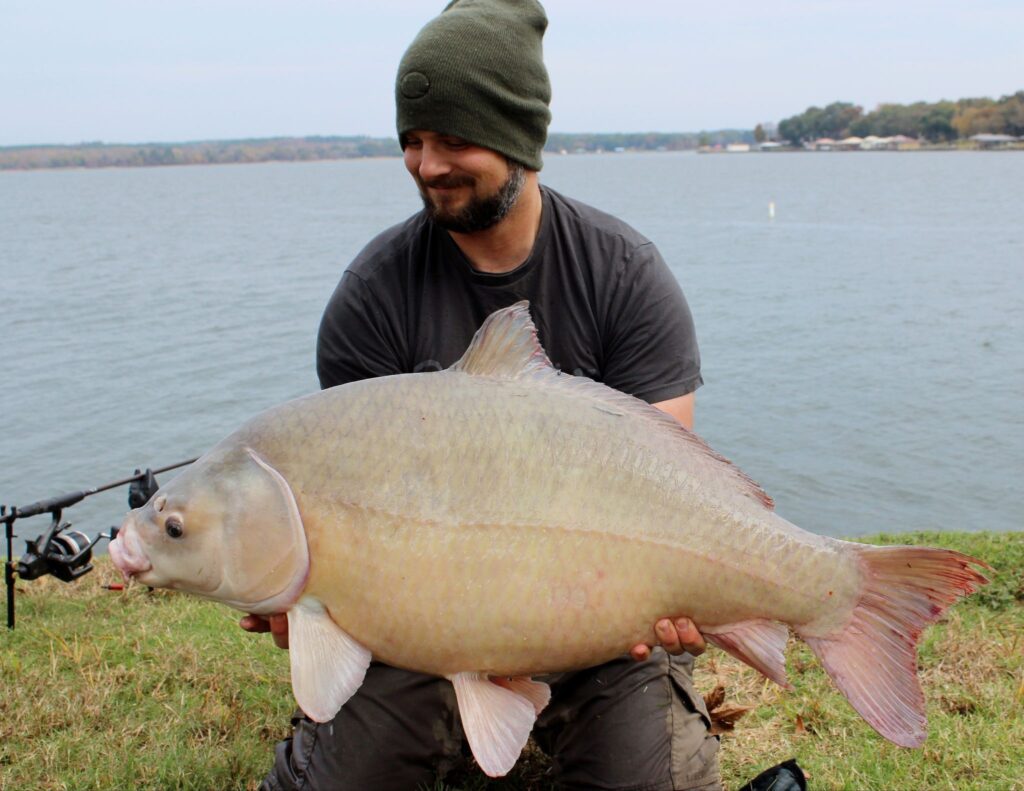
This basic approach will catch you fish on most waters.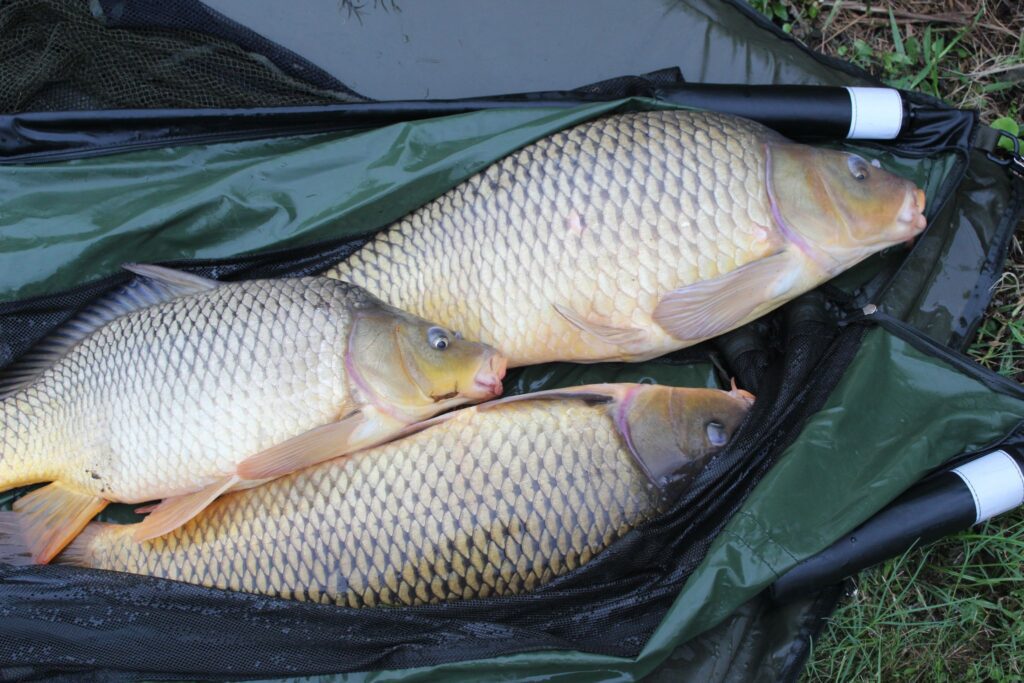
Catching a lot of carp from a water means getting all the factors right.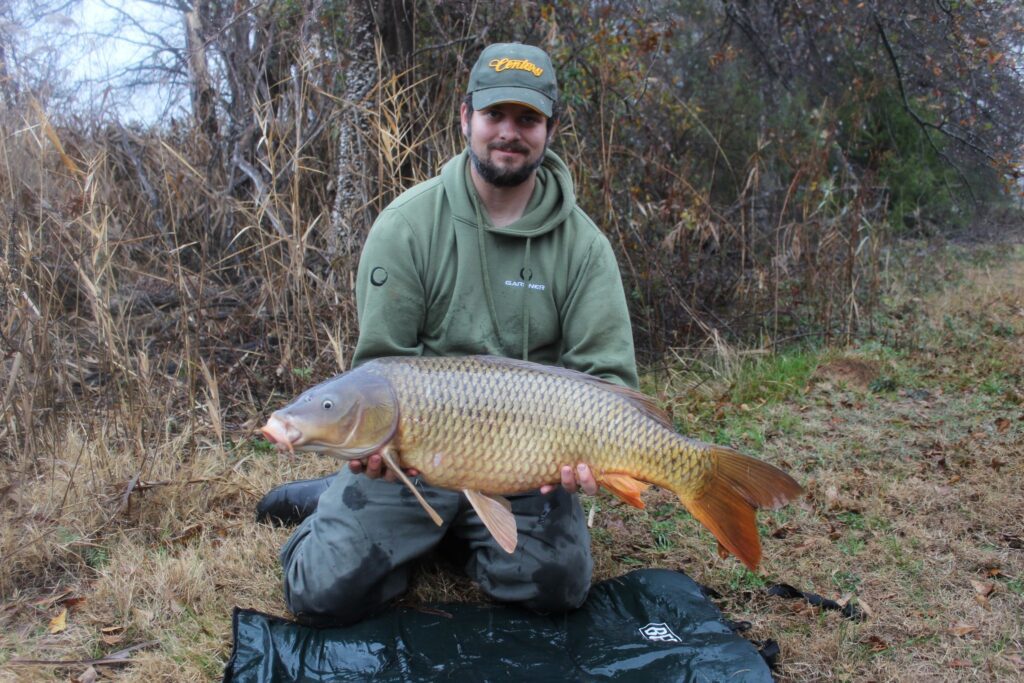
A nice mid 20 from Mill Creek Lake in Texas.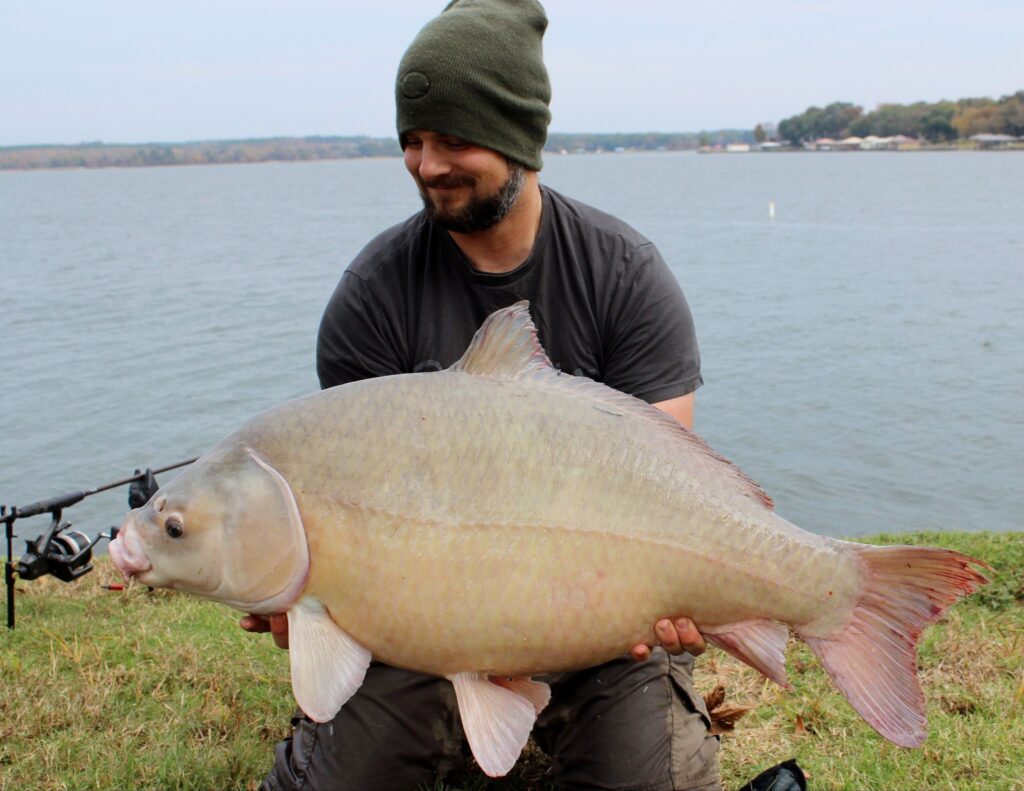
Simple, accurate baiting works for carp and buffalo.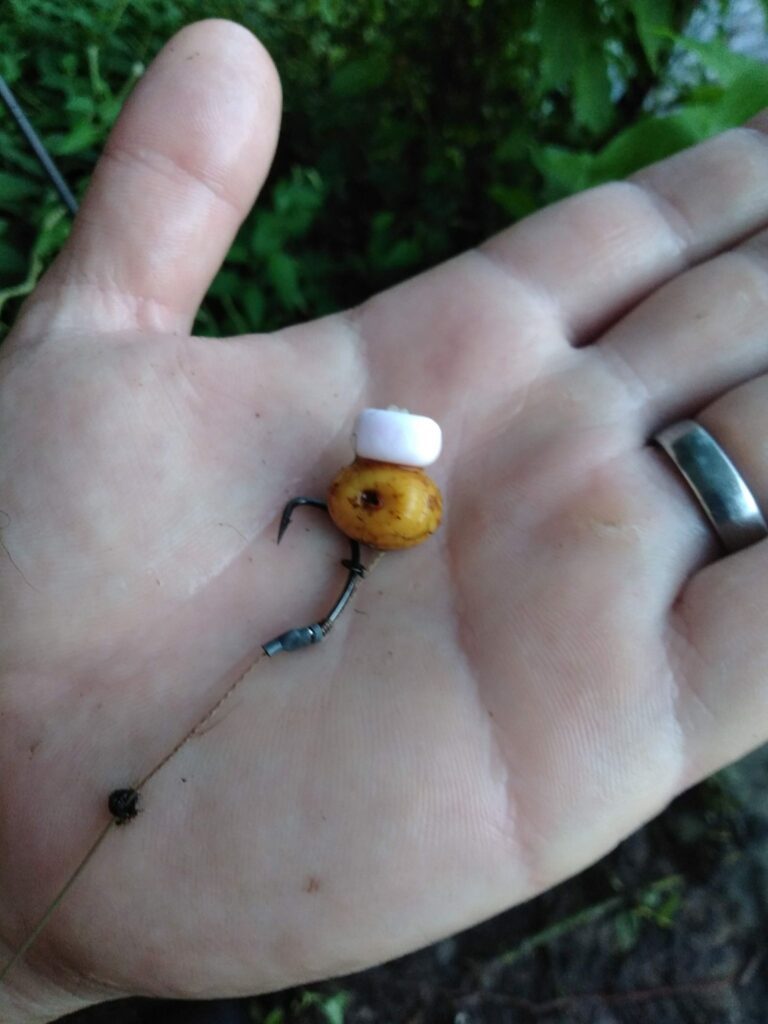
Tiger nut and plastic corn is widely used and effective.
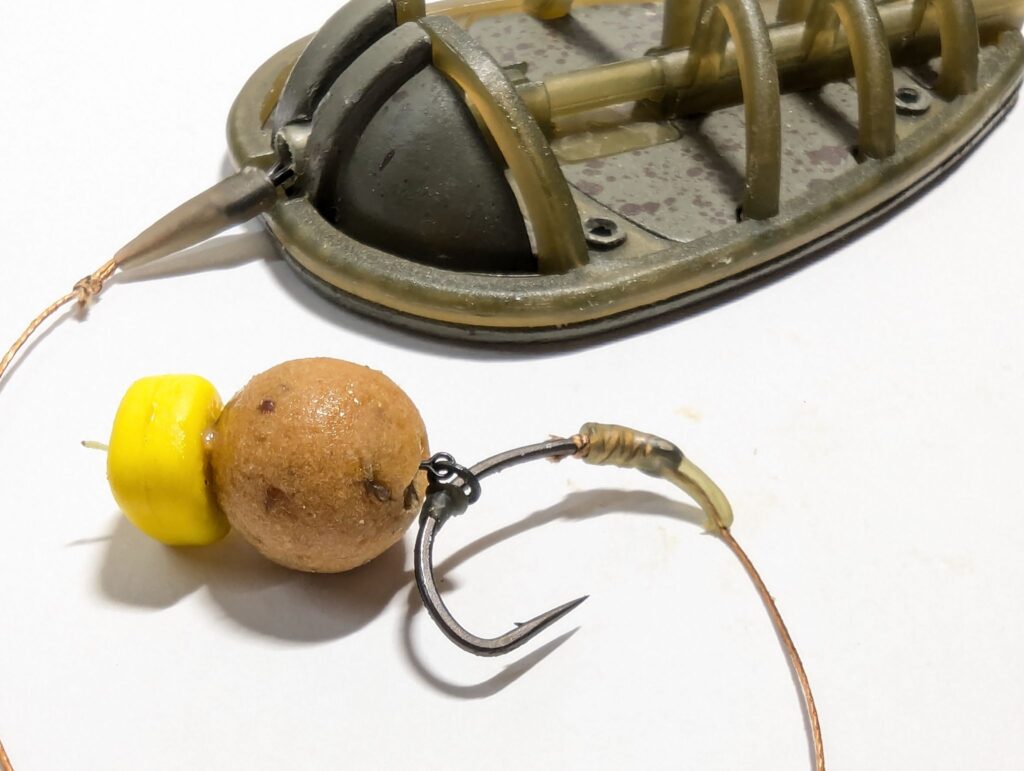
The method feeder rig that I have good luck with.
Tip: Quick Change hook baits. Being able to switch hook baits quickly (or get fishing quickly on a short session) will catch you more fish. I make up a number of different baits with swivels already in them so I can switch as needed without having to use a baiting needle every time.
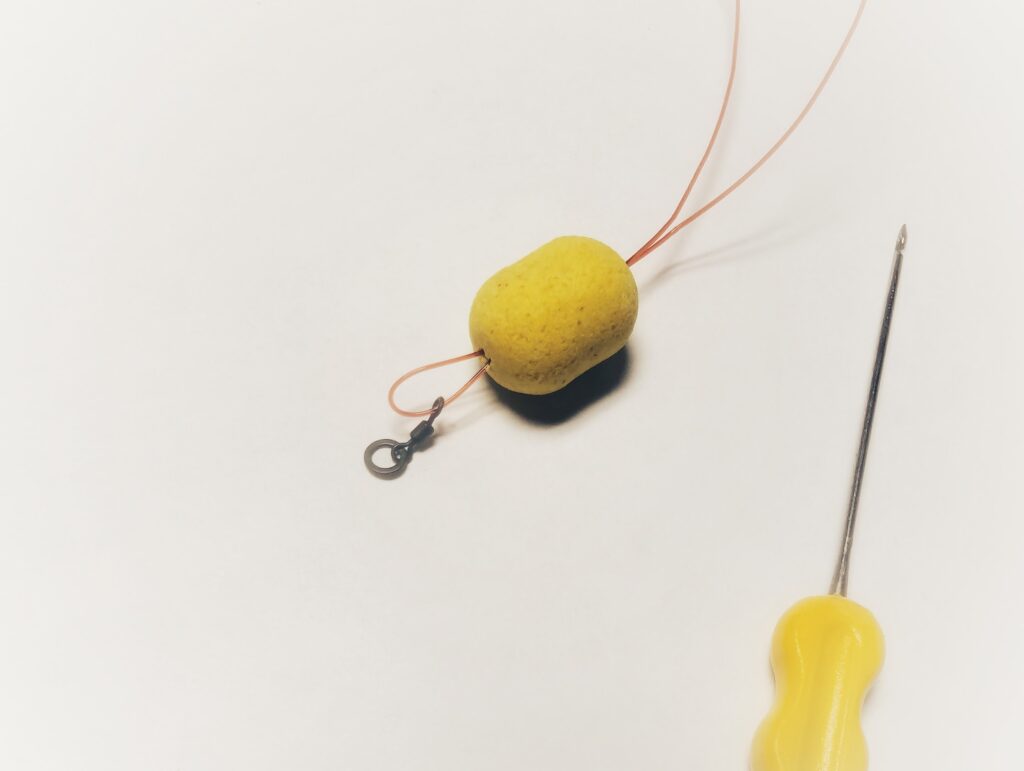
Step One: Using a baiting needle pull some stiff mono through the bait as shown with the swivel in the loop.
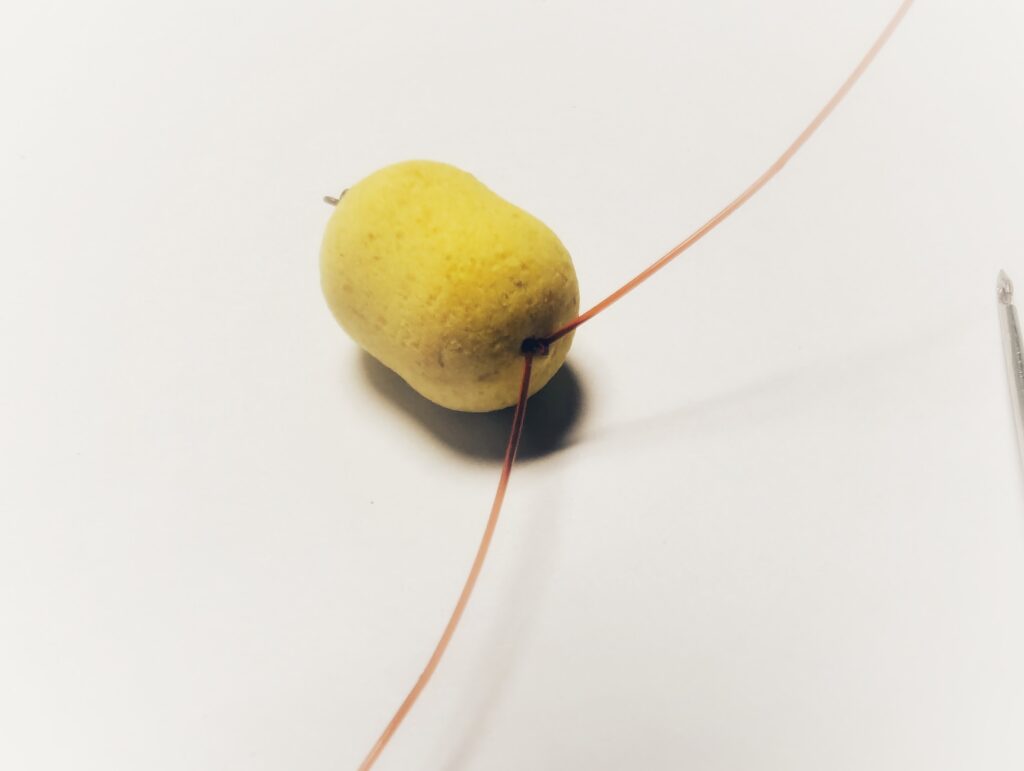
Step Two: Tie off the tag ends with a few overhand knots.
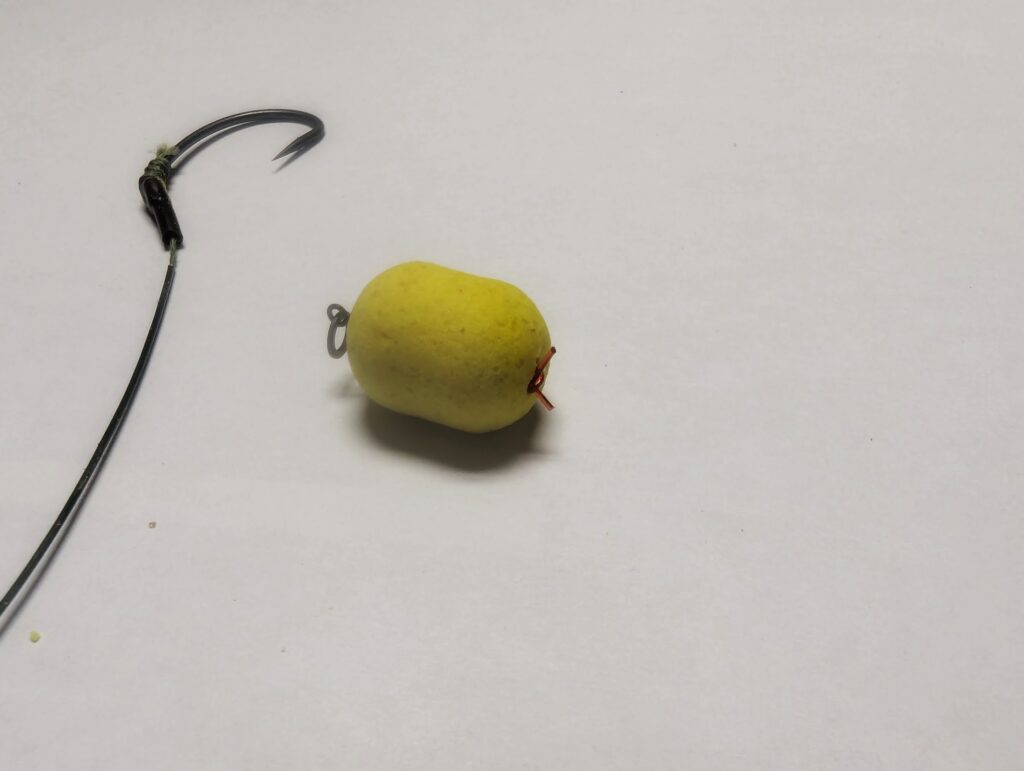
Step Three: Cut off the tag ends to form a stop. The bait is now secured just like if you used a hair stop.
.
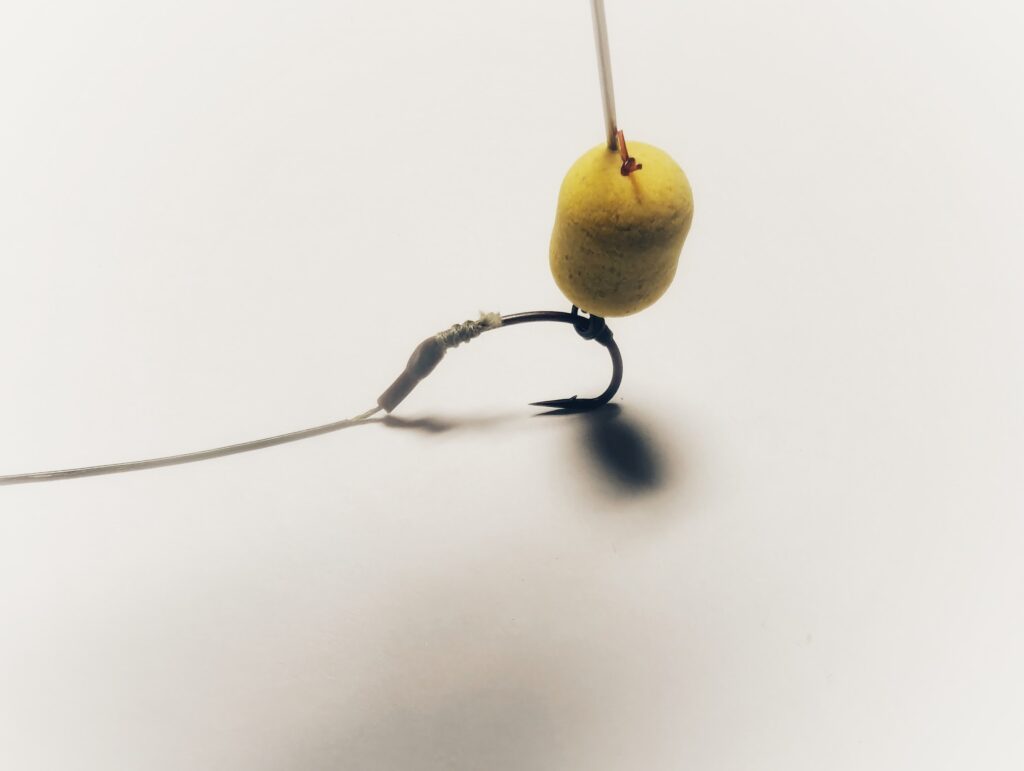
Step Four: Slide the bait onto the hook and use a hook bead to keep it from sliding off the shank. With a wafter your hook will sit touching the bottom with the bait floating up.
31 comments
Comments are closed.